How Much Does It Cost to Furnish an Airbnb in Dubai?
It is the first question almost every investor asks: how much does it cost to furnish an Airbnb in Dubai? It is also one of the hardest to answer with a single figure — because the honest answer is that it depends, and the things it depends on are worth understanding before you set a budget.
A short-term rental fit-out is not a fixed product with a fixed price. It is a project shaped by the size of the property, the standard of finish you are aiming for, whether any building work is involved and the quality of furniture you choose. This guide explains what actually moves the number, so you can plan with confidence rather than guess — and read any quote you receive with a clear idea of what sits behind it.
Why there is no single price
Two apartments of the same size, in the same building, can be furnished for very different budgets — and both can be the right decision. One investor may be positioning a unit at the value end of the market; another may be targeting premium guests who expect a higher standard of comfort and design. The interior has to match the positioning, and the positioning sets the budget.
This is also why a credible studio will not quote a price before understanding the property. A number given without seeing the unit, the layout and the brief is a guess — and a guess is exactly what an investor does not need when planning a return. A useful budget comes from the project, not from a rule of thumb.
What actually drives the cost
A handful of factors explain most of the variation between one furnishing budget and another. Understanding them lets you see why two projects can be priced so differently:
- The size of the property — a studio needs far less furniture than a two-bedroom apartment or a villa, and the budget scales with the number of rooms there are to equip.
- The standard of finish — a clean, well-styled mid-market interior and a premium, design-led one use different furniture, different materials and different amounts of custom work.
- Whether renovation is involved — if the unit needs building work, new joinery or a reconfigured layout before furnishing begins, that is a separate cost line with its own logic, unrelated to the furniture itself.
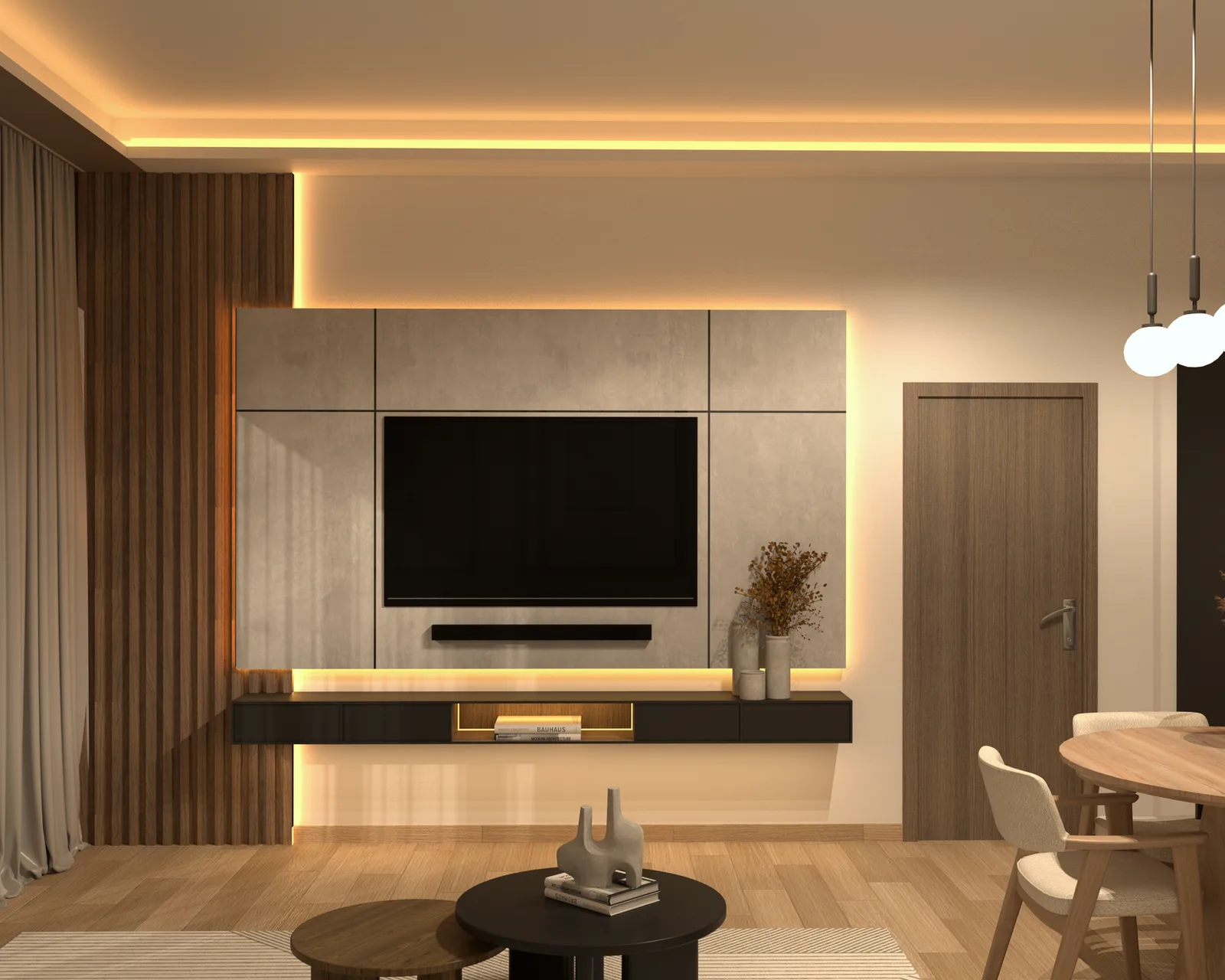
- Custom joinery — built-in storage, a fitted TV wall or a bespoke headboard add cost, but in a compact unit they often add more value than they cost by making the space work harder.
- The quality of what you buy — furniture chosen to survive constant turnover costs more at the outset and far less across three years of replacements.
- Sourcing, delivery and installation — consolidating orders, transport, assembly and styling are all part of the project, and a turnkey service prices them in rather than leaving them to the owner.
The main categories of spend
Whatever the final figure, a furnishing budget tends to break down into the same categories. Knowing them helps you see where the money goes — and, just as importantly, where it should not be cut:
- Furniture — the beds, sofas, dining setting, storage and larger pieces that define how each room is used.
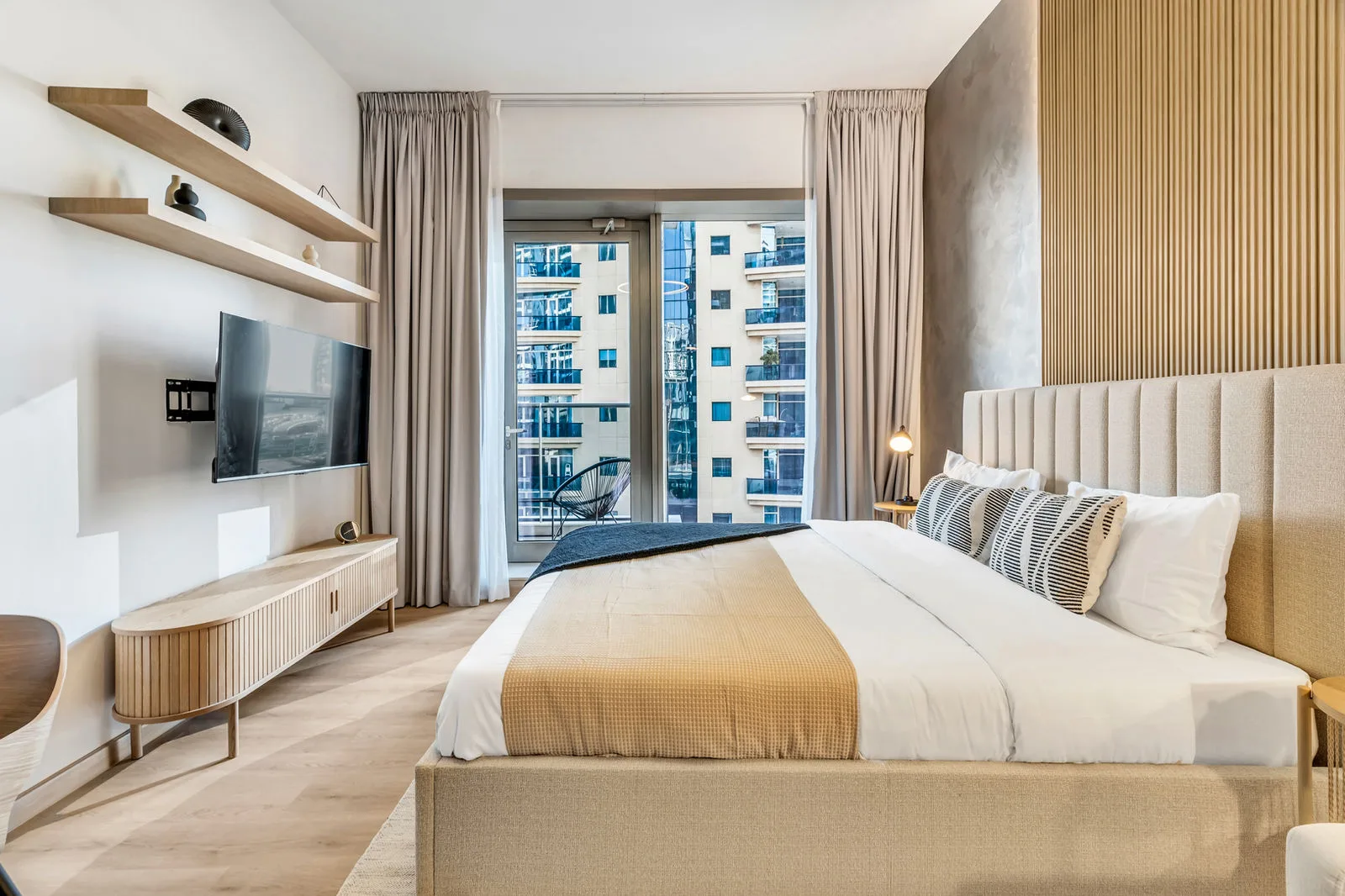
- Beds and soft furnishings — mattresses, hotel-grade bedding, curtains, rugs and cushions; the bed in particular deserves genuine investment, because it is usually the most important photo in the listing.
- Kitchen equipment — cookware, crockery, glassware, utensils and small appliances, so a guest can actually cook a meal and eat it.
- Lighting — moving beyond a single overhead fixture to the layered ceiling, wall and table light that makes a unit photograph well and feel welcoming in the evening.
- Appliances and electronics — a television, and any appliances not already provided with the property.
- Decoration and styling — artwork, mirrors, plants and the finishing details that make a listing feel cared for rather than merely furnished.
No single category should be starved to protect the headline number. A beautiful living room with an uncomfortable bed, or a stylish apartment with an unusable kitchen, will be found out in the reviews.
Furnishing for value, not just for the lowest price
The cheapest fit-out is rarely the most economical one. A short-term rental lives a harder life than a private home: new guests every few days, frequent cleaning and constant use. Furniture that looks acceptable on day one but wears badly quickly becomes a recurring cost.
That cost is not only the replacement itself. It is the nights a room is out of action while it is refreshed, and the slower, quieter damage of tired-looking photos and lukewarm reviews — both of which pull down the rate a property can hold.
The better way to think about a furnishing budget is as the cost of an asset that has to perform for years, not as a one-off expense to be minimised. Spending well on the pieces that work hardest — the bed, the sofa, the lighting and the surfaces guests touch every day — protects both the guest experience and the value of the property.
Studio, one-bedroom or villa: how scope changes the budget
The clearest driver of cost is simply how much there is to furnish. A studio is a single, well-resolved space where smart layout and storage matter most. A one-bedroom apartment adds a separate bedroom to equip to the same standard. A two-bedroom or family apartment multiplies the sleeping capacity, the bathrooms and the soft furnishings.
A villa adds scale again — more rooms, outdoor living and usually a stronger design identity to carry the positioning. Each step up means more pieces, more sourcing and a larger budget, which is why the type of property is the very first thing to establish before any number is discussed.
Where investors most often get the budget wrong
Across projects, the same budgeting mistakes recur. They are worth knowing in advance:
- Spending on decorative extras while under-investing in the bed and the mattress, which guests judge every single night.
- Treating the kitchen as an afterthought, then collecting a stream of small complaints that sink the reviews.
- Keeping a single harsh ceiling light to save money, and losing the warm, layered look that makes a listing photograph well.
- Buying the cheapest version of everything, then replacing much of it within the first year.
- Forgetting the cost of the things that are invisible in photos but very present in a stay — storage, luggage space, enough towels and a complete set of basics.
Renovation is a separate question
It is worth separating two ideas that are often confused. Furnishing is equipping and styling a unit that is structurally ready. Renovation is the building work — reconfiguring a layout, replacing a kitchen or bathroom, joinery and finishes — that may be needed first.
If your unit needs work before it can be furnished, that is its own budget line, with its own timeline. A studio that handles both, as Studio PASE does through its site supervision service, can plan them together so the two stages flow into one another rather than colliding.
How to budget with confidence
Rather than starting from a number you have heard somewhere, start from the property and the plan. Define the type of unit, the standard you want to reach and the guest you are designing for. From there, a studio can prepare a tailored proposal that reflects your actual project — and you can weigh it against what the unit can realistically earn.
Studio PASE designs and furnishes Airbnb and short-term rental properties in Dubai as turnkey projects, and we quote each one individually once we understand the unit and the brief. If you are planning a fit-out, send us the details of your property and we will prepare a proposal built around it.